Showing posts with label Manston Airport consultation response 2017. Show all posts

Wednesday, 10 January 2018

Some old Thanet photos Manston DCO consultation 3 issues.and correspondence.

The photos should expand if you click on them
Two difficult do you know where in Thanet? photos

Margate performers at the end of WW1 apparently.

As blog followers will know I wrote to the Department for Transport the other day I think it important to understand here that this correspondence is not about whether I am for or against various uses for Manston but about the 3rd consultation process for the RSP DCO wosisname ticking the boxes so it is at least valid and not a waste of time for everyone concerned.

For anyone who doesn’t understand this, the old Manston Airport site is currently owned by the people who rescued the Pfizer site at Sandwich where 2,500 local people work. It is now the main site in the area for employment so is probably responsible for a lot of other local jobs. Their plan for the Manston site is basically a mixture of light industrial units, housing and leisure including a historic aviation leisure atraction that uses part of the old runway. 

Since before they bought it there has been a firm or firms called RiverOak or RSP trying to buy it, for some reason back when Manson was on the market the owners wouldn’t sell it to RiverOak. RiverOak say they want to use the site an airfreight hub I can't see how the figures for that would add up assuming they have to pay the compensation you would expect. Land compensation and property blight compensation.

Since the current owners bought the site RiverOak under various slightly different company names have tried to use various level of levels of government to get hold of the site using permutation of the compulsory purchase legislation.

The latest one is a thing called a Development Consent Order, DCO, a DCO has never been used for airport expansion although it looks as though the Heathrow third runway is further along this road as they have already put together their compensation scheme for people adversely affected by the noise and air pollution.

The key to a DCO is that it is a front loaded process, which means that the applicant is supposed to consult with the local community, hammer out any snags and present a workable package to the government.


So first here is the correspondence I sent to the government department (pins) now published on their website with their response https://infrastructure.planninginspectorate.gov.uk/projects/south-east/manston-airport/?ipcsection=advice&ipcadvice=0bccaa1574

I got this as an email from which I replied to

From: michaelchild@aol.com [mailto:michaelchild@aol.com]
Sent: 08 January 2018 14:23
To: ManstonAirport@pins.gsi.gov.uk
Cc: manston@communityrelations.co.uk
Subject: Re: Manston Airport

Hi Richard
Since your reply on Friday the applicant has published their statement of community consultation and started sending out the paper notifications (see attachment) as per their statement.
I haven’t had time to look at your reply or their documents properly but wished you to note that.
1 The cards are being sent to all residents in Ramsgate population 40,000
2 They contain an invitation to a one day consultation event at a venue that holds about forty people.
2 The cards refer to additional environmental information on the RSP website but the PIER on the RSP website is the 2017 one and not the updated one.  
Obviously time is rapidly running out on this one, and while I do hope to have time to read the documents and respond to them, I thought it was important to alert you to obvious errors in the process. 
Best regards Michael

since publishing the big arrows and things appeared but as they are not in my editor but some I am having trouble removing them
This resulted in an email from RiverOak who were copied in to my email to pins

 manston manston@communityrelations.co.ukHide
To michaelchild michaelchild@aol.com
CC ManstonAirport ManstonAirport@pins.gsi.gov.uk
Slideshow
Dear Mr Child


Thank you for your email.


Taking into consideration feedback from the consultation in June and July 2017, as well as dialogue with the local authority, we are sending postcards advertising the consultation to all properties within 3km of the airport boundary and also all properties in the towns of Ramsgate and Herne Bay. Both event venues were used during the previous consultation and we had over 400 people at the Ramsgate event. The venue has been carefully chosen as being in central Ramsgate and accessible by public transport and by wheelchair users.


The updated PEIR, along with the full suite of 2018 consultation documents will be available on the project website (www.rsp.co.uk) from the start of consultation on Friday 12th January.


Kind regards


Sam


RiverOak Strategic Partners

Manston Airport consultation team

E: manston@communityrelations.co.uk 

W: www.rsp.co.uk


I had heard that there had been no dialogue with TDC so wrote to them

On 10 January 2018 at 11:21, <michaelchild@aol.com> wrote:

Hi Iain

We seem to be back in RSP consultation time, third one if you count the non statutory and very time consuming in terms of ongoing crying wolf that you can’t ignore if you have an investment in the area. As I live in Ramsgate, have a business here and children in a good school here I obviously can’t.

I have looked at both the Statement of Community Consultation http://rsp.co.uk/documents/rsp-documents/06-statement-of-community-consultation-2018/ and the written notification that RSP are sending out (a copy of this should be attached if I remember at the end of writing this) and both documents seem to have been prepared without local community understanding and some sort of editing of errors.

The most basic issue is that they appear to be posting out for the first time to local residences where in excess of 40,000 live an invitation to a one day event at a venue that holds about 40 people.

The last time the held an event at this venue there was no postal notification and in the course of the day about 400 managed to attend, including me. With that many people the event was packed even using the outdoor area adjacent to the rooms (something I don’t think will work in winter) and frankly with half that number attending it would be difficult to engage in a meaningful dialogue.    

I think it is unreasonable to send out a postal invitation and expect less than 1% of the recipients to turn up.

The postal document (which I gather some people have already received) refers to documents which are not on the RSP website although similar documents relating to the 2017 consultation are and are not clearly labelled as such http://rsp.co.uk/documents-page/    

I also note that they are already having web publishing issues with the statement having been published and obviously not checked http://rsp.co.uk/documents/rsp-documents/06-statement-of-community-consultation-2018/ I have only tried it in Chrome which is the most popular browser used locally, but.

Page 1 the header template hasn’t been hidden properly

Page 2 is a blank template

Page 3 starts a third of the way down the page.

I don’t know if there is anything missing that should be in the blank bits, any ideas?

As this is a sort of virtual pdf with a very small and unlabelled download button on it I assume most people wouldn’t realise it only functions as more than a picture of the page if you download it.

And of course we are back where we were in terms of not just using a navigable and searchable html website for the consultation, that ordinary local people could use. I am assuming that we are back to huge files that the computers I use for publishing large and complicated local history books will have difficulty running consecutively.

Anyway the question is, as I believe that TDC are the main consultees to the format of the Statement of Community Consultation and the way the consultation engages with local people, what went wrong? What was the dialogue about this between RSP and TDC and and can you send me a copy with anything sensitive redacted?

I would have thought that the minimal information on the postal drop would need to explain that the lowest number of flights would be 10,000 with the possibility of night flights, so that local people would understand that this is an important issue.

There are bound to be noise and air pollution aspects that will effect, quality of life, life expectancy, productivity in local business and concentration issues in local schools. 
Best regards Michael


Who replied

 Iain *******
To

Contact michaelchild@aol.com
Dear Michael,

Thank you for the email. The Council's response to both Statements of Community Consultation can be found via the following link: https://www.thanet.gov.uk/the-thanet-magazine/campaigns/manston-faq/ on the right hand side of the page.

The Council will review all comments received about the adequacy of the consultation including your email to inform its formal response (the Adequacy of Consultation statement) which is part of the NSIP process.

Kind regards
Iain ******
      
And finally I sent this off to pins

 michaelchild michaelchild@aol.com
To manstonairport manstonairport@pins.gsi.gov.uk
CC manston manston@communityrelations.co.uk, g.yerrall *****@****


Hi DCO team at pins

I have now managed to peruse the Statement of Community Consultation more thoroughly and have written both to TDC and RSP expressing some of my concerns, which I have copied to pins.

So far in this 2018 consultation process, in terms of accessibility and in terms of RSP listening to previous feedback, replying to it in a meaningful way and acting on the issues my current concern is the accessibility of the information presented on their consultation website.

You will probably remember my concerns about this issue during the previous consultation and it would appear that the same type of problem is occurring already with the Statement of Community Consultation. 

http://rsp.co.uk/documents/rsp-documents/06-statement-of-community-consultation-2018/ I have only tried it in Chrome which is the most popular browser used locally, but.

Page 1 the header template hasn’t been hidden properly

Page 2 is a blank template

Page 3 starts a third of the way down the page.

I don’t know if there is anything missing that should be in the blank bits, do pins?

As this is a sort of virtual pdf with a very small and unlabelled download button on it I assume most people wouldn’t realise it only functions as more than a picture of the pages if you do download it.

This is a similar problem to the issues I highlighted previously and I am hoping that because of the front loaded nature of the DCO it will be possible to address this issue before the larger documents such as the 2018 revised PEIR are published.

Apart from pins, TDC and RSP is there anyone else I could contact in order to achieve a consultation website that ordinary local people can access using the equipment they are likely to have, smartphone, tablet or home desktop computer?

Obviously a group of huge pdf files will not be navigable, searchable or in any normal sense accessible on the internet for local people in any normal way that people would expect.

What is needed is an ordinary html website where large documents like the PEIR are presented in the form of a series of linked pages, small enough to open in a conventional browser, with a search form and an index presented as a series of links to the information contained within the PEIR.

Further to this there is the issue of publishing the pages so the conventional search engines like Google can find the content, so that it isn’t hidden from people using the internet locally, by this I mean that it just isn’t good enough to put information on the internet if no one can find it unless they know the title header or url of the document.

By way of example the airfreight hub proposed by RSP would generate noise pollution in Ramsgate and as the previous PEIR discusses this issue and has been online for some time, one would expect that putting, noise pollution in Ramsgate, into the Google search form would lead you to the information published on the internet by RSP.

This doesn’t in fact happen because of the way RSP have published the 2017 PEIR to the internet. They have in fact hidden the information in a way that you can only find it if you already know where it is hidden, I don’t think this is desirable when the information being available on the internet is stated as an aspect of the DCO process. 

Frankly any help with this one from pins would be helpful, RSP don’t appear to have link to their website designer on their website, which would normally be my first point of contact when reporting a broke webpage. 


Best regards Michael


Monday, 18 September 2017

Penguin in Ramsgate Harbour, Manston DCO minor update,

Says on this one,“Penguin” yacht belonging to the artist-author, Donald Maxwell, who wrote and illustrated “Unknown Kent”, “A Detective in Kent”, and many other books. He was in this port owing to damage in a gale, and had been hauled up on the slipway at Moses’ shipbuilding yard, the last craft to use it.


With Manston it seems that there are various truths, in the case of this Ellington Park photo the plane was horizontal and the tree leaning but adjusting the photo seemed appropriate.

I have been badgering on about the snags of opening a freight hub, mostly those related to air pollution, so time for an update.

Manston DCO update
Background.
Back in mid July we had a consultation about turning the old Manston Airport site into a major airfreight hub.
At the moment the site is owned by a company called Stonehill Park, this is essentially the same people who bought the old Pfizer site when Pfizer were going to pull out and close. This was a success story which even meant that Pfizer kept a small part of their operation going there, a lot of other companies moved there too and at the moment Discovery Park, which is what they called this enterprise, is the main site for employment locally.
Stonehill Park have submitted plans for a mixed use development, this means industrial units and housing, as is usual with large developments this will include doctor’s surgery and schools. Here is a link to their website http://www.stonehillpark.co.uk/
The outline planning application has been submitted and you can view it by copying the application ref is OL/TH/16/0550 and putting it in the TDC planning website search box, here is the link to it https://planning.thanet.gov.uk/online-applications/
The people who want to turn the site into an airfreight hub, obviously don’t own the site and Stonehill Park don’t want to sell it.
The people who want to turn the site into an airfreight hub have been various permutations of a property investment firm called RiverOak.
This started out with an American RiverOak http://www.riveroakic.com they tried to buy the site from previous owners and were turned down, they subsequently tried to get TDC to buy the site using a compulsory purchase order but were turned down.
During all of this RiverOak changed to a UK branch of the American company and has now become RSP RiverOak Strategic Partners http://rsp.co.uk/
At the moment they are trying to get the Department for Transport to buy the for them using a thing called a Development Consent Order, DCO.
This is the DCO remit on the Department for Transport’s website:-
“The upgrade and reopening of Manston Airport primarily as a cargo airport, with some passenger services, with a capacity of at least 12,000 air cargo movements per year.”
New Information
Things have been pretty quiet since mid July, but now documents have started to appear on the Department for Transport’s website, I would guess because everyone involved is back from their holidays.

The consultation attracted around 2,000 responses and the DfT have published their summery of their first meeting with RiverOak since the consultation, here is the link https://infrastructure.planninginspectorate.gov.uk/wp-content/ipc/uploads/projects/TR020002/TR020002-Advice-00098-1-170823%20Manston%20Airport%20Teleconference%20Meeting%20Note%20Final.pdf
I think one issue here will be whether the consultation was done properly and if it will have to be done again.
What were the old main issues, aircraft noise and water drainage seem to be being addressed by the statutory bodies.
RiverOak say they will submit the application by Christmas.
There is a letter from Save Manston Airport Association which says that they were happy with the consultation process which so many people complained about, here is the link:-
It’s a bit hard to follow what their point is here and as a lot of the issues I had were to do with the applicant’s website not working properly, something the RiverOak accepted and does leave one wondering whether Save Manston Airport Association were happy with it because they didn’t actually try to use it.
Then there is my follow-up which is mostly related to the particulate air pollution issue.
Since I wrote this there has been a new study published in the proceedings of The National Academy of Science give a relationship between measurable pollution levels and the number of years it will knock of people's lives. 10 micrograms per cubic meter of particulate matter pollution reduces life expectancy by 0.6 years.

There is also an increasing body of research pointing to particulate air pollution as one of the main causes of dementia. 

So I have tried and am still trying to get RiverOak to look at mitigating the air pollution associated with an airfreight hub, it’s a case of writing to them and getting no reply, see https://infrastructure.planninginspectorate.gov.uk/projects/south-east/manston-airport/?ipcsection=advice&ipcadvice=c2ba63ed60

Now we are coming close to being able to tell just how much having an airfreight hub at Manston would knock of off local people’s lives, i.e how much earlier people living in the Thanet towns will die if the freight hub is built than if it isn’t.  

I have added the following to help understand the housing and employment issue 


The Thanet employment figures for April - March 2017 i.e. latest published. So does this mean we would need 50% more of everything, schools, hospitals, housing, or if there are 50% more people in employment, Economically Active† 65,000 74.3 80.8 78.0
In Employment† 63,000 71.9 77.7 74.2
Employees† 47,300 54.2 65.2 63.2
Self Employed† 15,700 17.6 12.1 10.6

Unemployed (Model-Based)§ 3,700 5.5 3.8 4.7


Work wise in the bookshop today, here is what went out http://michaelsbookshop.blogspot.co.uk/2017/09/on-road-in-bookshop.html


After work my walk didn’t go quite to plan, I got up onto the clifftop in front of Wellington Crescent and considered the coast of France, which you can see, but I can’t photograph that well, this was followed by what felt like rain coming on, 
 not sure how much these will expand or what you can see of France
 oh well

Anyway I took a few pictures of the ships at sea and the firemen at The Bench then scurried off back home snapping Destiny’s knitted poppies on the way, here is the link to the photos http://www.michaelsbookshop.com/917L/id23.htm  

Oh what happened? I thought rain was imminent and in the end it didn't rain, so I feel a bit wosisname.


Wednesday, 26 July 2017

The Manston DCO Consultation and Responses


So here are some of them

TDC Thanet District Council


Text version


NNF No Night Flights


Text version


SHP Stone Hill Park 


Text version


RTC Ramsgate Town Council


If you send me your response or a link to where an organisations response is published online I will add it. In a general sense I prefer not to add the response of private individuals without their consent although will publish those that are on publicly available websites. My email address is michaelchild@aol.com

My own response is at


and my blog posts about the consultation at


At the beginning of the week I thought I would do a post summarising the main responses to the rsp/Riveroak statutory consultation, this was altogether a strange business as when I tried to find responses supporting the consultation I just couldn’t find any published anywhere online.

After various fails with websearch I posted on the Save Manston Airport and Manston Airport Loud Hailer Facebook groups asking where the responses were, no one on either group managed to find any response supporting the DCO.

My intention was to try to find the various responses and link them to this post which is tagged and link to my other posts about the consultation, the main reason for this is so I can find them later for the next stage in the DCO process.

Technically an issue is Facebook, which is where most of the individuals responses can be found online but Facebook isn’t searchable in the way a conventional website is, another aspect with Facebook is that much of what is published there is visible to some peole but not others. 

There are also issues where responses are published on the internet as downloadable pdf files instead of as text and images within a conventional html webpage.

In the cases where the response isn’t presented as a conventional webpage open to anyone using the internet and free of advertising I have also published the text only part of the response. This should be particularly useful if you are trying to read the thing on you mobile with a weak signal or trying to search for words in the document by press Ctrl and F then putting the word in the box that comes up.

The snag is that the pictures and diagrams won’t show properly.

In terms of the consultation itself there is a fairly largeconsensus of opinion that aspects of it were flawed, something that appears to have stretched the pins resources because if trying to deal with the correspondence about this. 

My take at the moment is that there are several possibilities.

1 is that rsp will submit the DCO

Should the application be formally submitted, the Planning Inspectorate on behalf of the Secretary of State has a 28 day period to determine whether to accept the application to progress to Examination.

a If the application progresses to Examination, the process then asks people to register as an ‘Interested Party’ with the Planning Inspectorate by sending us a 'Relevant Representation' about the proposal. This Representation will be considered by the appointed Examining Authority during the Examination period.

I think this is what people are talking about when they say another consultation period.

b if pins reject it I think that is essentially the end of it.

2 is that rsp withdraw the application, I think this would leave them in a postion to resubmit it at a later date.


I am mentioning 2 as it doesn’t look as though aspects of the consultation, especially the way the documentation was presented  digitally conformed to the application rules.


Friday, 21 July 2017

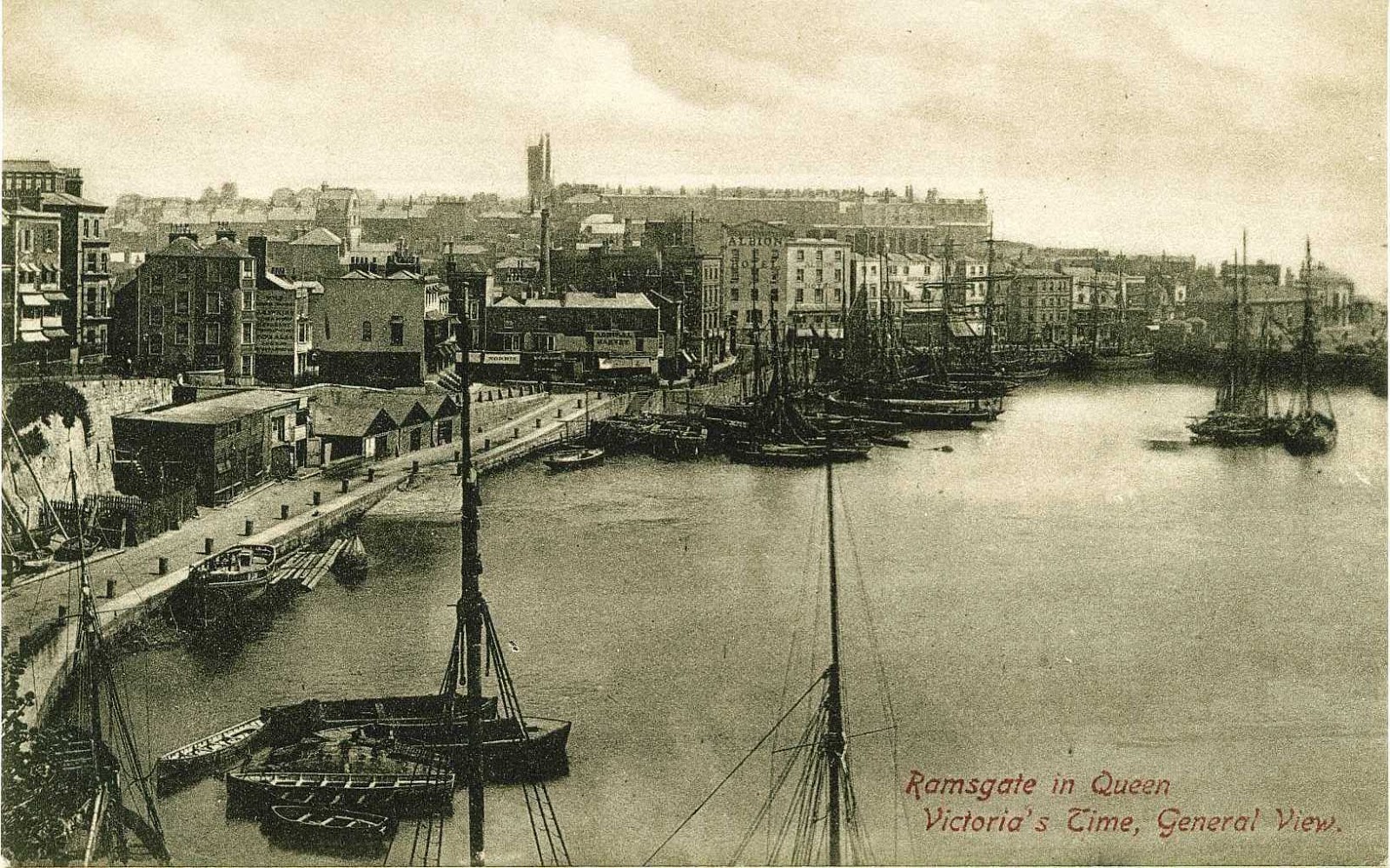
Ramsgate Festival starts tomorrow I sort of finish the Manston consultation, some old Ramsgate pictures, possible ramble.

Here is the link to the Ramsgate Festival http://ramsgatefestival.org/events/

Next some old pictures of Ramsgate these will probably expand if you click on them a bit, I think all but the last three are before 1900


A busy day in my bookshop today with a large local history factor as you can see from the books that we put out today if you click on this link

I am reminding people that you have to get your responses to the Manston airfreight hub DCO in by Sunday for them to count.

This is very difficult mainly because the consultation website doesn't work properly, so regardless of how you feel about the project a few helpful pointers.

This from rsp:-

"Thank you for your email. There are two immediate solutions that may work;

  1. When the file opens, there is an icon that you can select to download it as a regular pdf. I’ve circled the icon in the image below. If downloaded this way the files are easily searchable as standard PDFs.


  1. Alternatively, if you select “Submit feedback” from the page http://rsp.co.uk/statutory-consultation/ that will take you to a page which also includes all of the documents available for download as PDFs. The files are listed at the bottom of the page.

Please let me know if this helps.

Kind regards,

Ross

RiverOak Strategic Partners"

Now I guess if you have some understanding about computers you will realise just by looking at the size of the pdf files they probably won’t run on your computer.

Publishing nearly 200 local history books I have a very big computer which is called “Deep Thought” when I tried to run that lot on it all at the same time it eventually said something like can’t divide by zero, which is its way of swearing, I think.

The workaround I used involve a much bigger computer, which I couldn’t afford, what I did was to upload them all to Google Drive and opened them each in a different tab in Google Chrome.

In terms of help with my response to the consultation I have put the various sections of it on the Manston related Facebook pages, for and against and although I have had some useful feedback, what I haven’t had is any counter argument, saying I have got my information or figures wrong.

anyway here is my response:-

-----Original Message-----
From: michaelchild
To: manston
CC: customer.services ; county.hall ; richard.styles ; Richard.Price ; iain.livingstone ; manstonairport
Sent: Fri, 21 Jul 2017 16:46
Subject: Manston Consultation response


Michael Child
Michael’s Bookshop
72 King Street
Ramsgate
CT11 8NY
1 Consultation issues
This is my feedback to the RSP/RiverOak 2017 statutory consultation relating to their DCO application summarised on the National Infrastructure Planning part of the Department for Planning website as: - “The upgrade and reopening of Manston Airport primarily as a cargo airport, with some passenger services, with a capacity of at least 12,000 air cargo movements per year.”
My understanding is that there is a strong probability that the DCO would include a CA and that this means there would also need to be proof of legitimate and transparently sourced compensation funding for the DCO to be accepted.
Completing the consultation there is a sense that somehow communication and outreach to local communities isn’t and hasn’t been in proportion to the size of the project and that community engagement has been at the level one would expect for a new road junction at Manston, affecting people within a mile or so.
I attended two of the public sessions one at Canterbury and one at Ramsgate and the overall impression I formed wasn’t that of a company working towards building a major airfreight hub. It was much more that of a group of about four people who had brought along PR reps from some other companies and that their main objective was to trigger a DCO and then see what they could do once the had acquired the site, assuming that the possession of the DCO and associated cpo could attract investors.
I have since both spoken to and used the internet in various ways to communicate with other people who attended the consultations. The overall impression being that they were given conflicting information about the project and like me found that there wasn’t anyone available to answer many of the most basic questions.
In a similar way since the previous consultation held by RSP/RiverOak a year ago there has been an overall lack of response to basic and related questions sent to RSP/RiverOak directors and their advisors.
As a local retailer and resident I am aware that local awareness of the project existing is low and awareness of the magnitude and the implications the project would have to the local area are almost non-existent among the wider local community. Those aware seem to be mostly people who supported some sort of saving of the airport starting from when closed and those who opposed nightflights
There is an element of cry wolf to this as over the last ten years various airport operators have proposed large aviation expansion at Manston, which has failed to happen.
There is an element of economic musical chairs to Manston with the site having changed hands as an airport over the last 20 years for figures of around £1, £5m, £22m and so on. With airports having been designated brownfield and the potential for the site’s value as residential building land being in the region of £1bn the potential for the site owner to receive a windfall can’t really be discounted.
The issues with the consultation continue here to the point of competing it, having notified RSP/RiverOak 3rd July, about three weeks ago that their consultation website didn’t function properly and having eventually had emails from them acknowledging this and promising to try and put it right, nothing has actually been done to make work properly.
The most important issue here being that only the left half of the webpages are displayed meaning that only even numbered pages of major documents, show on most computers. With filling in the consultation the downloadable feedback form is a fixed document that I can’t write on with an IT device and send to you and in view of the existing website issues I don’t have confidence in the online form or ITC competence within RSP/RiverOak I am responding by email.
2 Business case.
I think for Manston to work as an airport it would need to be primarily operated as a heritage aviation tourist attraction perhaps based on a HFL grant and funding from aviation enthusiasts and focused around the expansion of the two existing museums.  It is possible that at times this could work in parallel with the limited local aviation demands.
As was the case with many previous business cases for aviation activity at Manston, the main issue is a misunderstanding of the words “hub” and “southeast” hub in this instance should be close to the centre of the area it serves and southeast in the context Southeast England is a roughly triangular area the three corners, which are northwest Oxfordshire, southwest Hampshire and northeast Kent. In terms of forming a hub for the southeast these corners are the worst locations.
I think the main issue here may be thinking of a hub airport as planes flying along the spokes of an imaginary wheel, when in reality it is passengers and freight moving along the spokes to and from the airport by rail and road.
The best, most central location, to the southeast is the Greater London Surrey border, which has the two existing major airports, one at either end of it. As very little of the commercial or industrial activity in the southeast is located in the southeast corner of the southeast this means that virtually none this activity is closer to Manston than the two existing major and competitive airports.
Because of a combination of road layout (particularly the UK motorway layout) and geography of the southeast regions of: - Oxfordshire, Bucks. Berkshire, Hampshire, IOW, Greater London, Surry, Sussex and Kent, travelling to Manston from almost any significant location outside Kent would involve passing close to one or both of the existing major airports. So for example a journey from Brighton to Manston isn’t done by travelling northeast towards Manston, but either by road or rail, it is done by travelling north past Gatwick and then east.
I think part of the most recent problem, which was the failure of Infratil, a major NZ company to succeed with an airport at Manston, was the tendency to think in distances considered negligible in NZ, without properly understanding actual travel habits and infrastructure in the UK.
A further major disadvantage Manston has with its main potential competitors, Gatwick and Heathrow, is that it isn’t, and isn’t likely to be connected to the jet fuel pipeline. This would add both economic and environmental costs of fuel there.
The first attempts to operate commercial flights from Manston started in the late 1950s Silver City (Britavia) which moved to Gatwick in 1962, Air Ferries the first proper airline started flying from Manston in 1963 this went bankrupt in 1968, this was followed by a 60 year history airport operator failure on the Manston site.
This business case appears have been written by some members of the same team that put together the last Manston business case for the Infratil when the airport was still operational and appears to based on similar very optimistic assertions. I think it has to be appreciated that Infratil are a large experienced and profitable company which run Wellington Airport (5.5m passengers a year) at a profit and not only did they reject this case but sold the Manston site suffering a considerable financial loss, because they thought it unviable, both in terms of the real business they were able to attract and the potential business which was forecast.
I suppose the bottom line here is that local residents, like myself are only aware of the applicants website, there doesn’t seem to be a physical RiverOak or RSP company employing non executive staff at normal business premises producing something tangible or some tangible service. When RiverOak first appeared on the scene their website claimed they were experienced airport operators and as their company has evolved during the DCO pre-application stage, moving the Manston project from http://www.riveroakic.com/ where it featured as the main project of an experienced aviation company to www.riveroakinvestments.co.uk where it appeared to be the UK branch of an experienced company to http://rsp.co.uk/ which appears to have no physical address and no history.
Obviously a project of this magnitude whether it succeeds or fails would have a significant impact on this area and commenting on the business case related to a business and related businesses without any defined history, similar business assets is very difficult and quite different from a case where I was commenting on say a business case produced by an existing airport operator.
There is also a sense in which this is a choice between RSP and the site owners Stonehill Park where the business owners have a good track record of running a successful business locally that has resulted in a substantial amount of jobs and economic regeneration in this area.
3 Noise Pollution and Compensation
My understanding from the PIER assumed flight paths, aircraft, engine types and so on, is that:-
1 The flight path over Ramsgate has to remain the same and changes to flight paths which may happen during later stages after the DCO submission will have no significant affect on overflying Ramsgate.
2 The noise impact on homes and businesses within Ramsgate will be significant and that plans to mitigate them should be at a fairly advanced stage prior to DCO submission as the DCO process is front-loaded.
3 Aircraft noise mitigation in airport expansion is mostly a matter of compensation and as an application for a DCO that would authorise CA must be accompanied by a Funding Statement which should demonstrate that adequate funding is likely to be available to enable the CA within the statutory period following the DCO being made, and that the resource implications of a possible acquisition resulting from a blight notices should have been taken account of, I am therefore assuming that the whole compensation issue has to be presented in one consultation response.
4 The issues related to the Ramsgate conservation zone and the number of listed buildings likely to be affected by noise should by this stage have been at least partially addressed in order to approximately assess sound insulation and cost with a view to determining compensation levels related to the resource implications.
5 Negotiation related to sound insulation within the conservation area between rsp, English Heritage and TDC conservation officers is already occurring.
Due to issues with accessing the PEIR documents and consultation website, see my emails, ref (Ross RiverOak Strategic Partners Manston Airport consultation team) I am uncertain that I have managed to view all of the consultation documents. So please accept my apologies for saying that documents that should be there are missing are actually there, if this is the case.
Obviously, I am no expert in airport expansion DCOs and have only been able to find examples of two which are expected to be submitted in the UK one being this Manston one and the other being for the third runway at Heathrow.
In terms of percentage expansion and therefore the difference to historic noise disruption the Manston project would the by far the greater civil aviation expansion based on previous activity at Manston.
In view of the front loaded nature of the DCO process and the expectation that there would only be small and unavoidable change after the application stage I had expected the PIER to be more compete in terms of already addressing solutions to known and fundamentally unalterable environmental problems.
Previous submissions for Manston expansion have included noise contour maps for unavoidable parts of the fightpaths, most especially related to the necessity to overfly the densely populated town of Ramsgate because of the location of the runway. I have been unable to find these within the PEIR.
A comprehensive noise pollution plan would seem to be particularly important as the possibility of night time flying appears to be envisaged as part of the application. 
Although the Heathrow expansion is at an earlier stage in progressing towards the DCO I am assuming that their noise mitigation and compensation package would be broadly similar to the Manston one. Although I suppose that as Thanet is an economically depressed area and therefore has higher levels of poverty some less comprehensive scheme may be envisaged related to the population being poorer with lower levels of employment and home ownership.
I also asked about the funding and compensation issue at the previous non statutory consultation and followed this up by email to pins 5.8.2016, the pins advice encouraged me to write to RiverOak which resulted in an email correspondence between me and rsp director George Yerrall who said, email 32.8.2016:-
“Dear Michael,
Thank you for your patience in awaiting my response.  I was away on vacation with my family and I try to “unplug” when I am away.
Your list of questions is hard for me to process as it contains numerous requests to respond to something said to you by a “RiverOak rep” as well as a number of assumptions you have made that seem factually difficult to understand such as your assumption that the airport would be “classified brownfield and that the cpo land compensation will be based on an open market valuation for brownfield land in southeast England., plus blight compensation.”
However, as you know, the PINS consultation process is very transparent and all of your issues will be addressed and published in due time.  I understand that waiting for answers can be frustrating and that is not my intent.
Thank you again for your patience and I look forward to addressing all of your concerns in the near future.
Best regards,
George”
From this I inferred that the statutory consultation document pack and website would contain, a site compensation plan, blight compensation plan, noise compensation or draft noise compensation plan. Having failed to find anything and having had no response from rsp about the issues with the consultation website and documents, I am providing the link to the Heathrow noise compensation plan for your information https://your.heathrow.com/takingbritainfurther/local-community/property-compensation/
Added to this would be the airport site value compensation I understand this is 283 hectares, designated brownfield. Independent valuation https://www.kent.gov.uk/__data/assets/pdf_file/0008/53882/Land-prices.pdf puts southeast non agricultural land prices, residential in the av £4m per hectare ballpark with the lowest in Dover at about £1.75m and industrial in the £1.1m ballpark. My assumption from your airfreight hub job forecasts is that your own assessment of the potential site value would be seen as profitable commercial, so that you would see the minimum site value as nearest equating to industrial. This would put your assessment of the minimum site value in the area of £300m, with the worst-case scenario rising to cover those parts of the site that the current owners intend for residential use being considerably higher. There is also the of course the situation where the airport was available as a failing business with no alternative viable commercial plans and could probably have been bought in the £10m ballpark so I assume this could be taken as a quasi-best-case scenario
In trying to comprehend how the CA and potential blight acquisition compensation could be covered by provably legitimately sourced investment that would be acceptable to the DFT and enable the publication of a transparent funding statement, which is an integral part of a DCO requiring CA, I have drawn some conclusions.  My understanding is that rsp isn’t an aviation company but an investment conduit and I find it difficult to see major investors attracted to a project with uncosted and potentially open-ended compensation liabilities. I am therefore assuming that potential investment, in the event of the airfreight hub scheme failing, would be covered by the potential residential site value of what I understand to be a brownfield site. I am also assuming that any blight acquisitions would increase in value considerably were this to happen.
4 Air pollution
The main issue with construction of an airfreight hub at Manston would appear to be the recent life expectancy reduction issues related to particulate pollution, this is the problem that has led to the national government considering a diesel car scrappage scheme.
In a general sense, the fuel used in jet engines produces similar particulate emissions to the fuel burnt in diesel road vehicles and the particulates produced from tyres landing on and running along runways similar problems to road vehicles.
Where particulate fuels are burnt in commercial transport mitigation in terms of emission, filtration becomes more economically viable with the larger engines in lorries and shipping. For smaller vehicles, cars and vans the shorter-term solution looks likely to be moving to petrol with the prospect that in about ten years we will have moved away from fossil fuels in private transport. 
In environmental terms this is a different but related problem to global warming, in simplistic terms the focus has moved from rising sea levels drowning people in a hundred years time, to particulates killing people in significant numbers now.
With jet engine planes, as detailed in the PEIR, there has been some progress very recently the most encouraging being recent work by NASA. See: https://www.nasa.gov/press-release/nasa-study-confirms-biofuels-reduce-jet-engine-pollution the underlying problem being that filtration isn’t an option.
Most of the available studies showing levels of particulates produced at airports have been made at Los Angeles airport LAX, when using them for comparison it is as well to remember that LAX is a very busy airport and that Los Angeles is already a very polluted city, so everything is as it were scaled up. In terms of visualising the issue Los Angels has approximately the same prevailing wind direction as Manston.
Current mitigation in the UK is mostly focused on a reduction in ground movement fuel burnt.
Expectations in the shorter 3 to 7 year period will probably include the use of bio fuels and the relocation of some activity from airports upwind of densely populated areas.
Expectations in the longer 8 to 15 year period may be focused on alternative fuels and fuel storage such as hydrogen and electric motors.
My efforts to discuss this problem with the RiverOak environmental team have been unsatisfactory so far. I tried at the previous non statutory consultation and was given a contact at Amec Foster Wheeler but have had no reply from him to my first email 10.7.7017 also sent to pins.
I attended the statutory consultation at Canterbury where the environmental team members I spoke to appeared to have no concept of the volume of fuel burnt at an airfreight hub and seemed to equate it to that burnt at a busy road junction.   
Obviously, the expected fuel burn figures at Manston are contained in the PIER in great detail, but for anyone trying to understand the problem and who isn’t conversant with large engines I have added the following paragraph to help with approximation.
The metric tonne and the imperial ton are almost the same weight, there are 250 gallons of fuel to a ton or tonne. A 747 type plane burns approximately 5 litres or 1 gallon of fuel per second so cargo plane allowances are usually measured in tonnes. The takeoff allowance for a 747 is 2.5 tonnes and the ground movement (landing or takeoff) allowance around 1 tonne.
The proposed Manston site has been designed to minimise the ground movement time, but with the on the ground part of takeoff and landing I think it reasonable to assume that in excess of a tonne of fuel will be burnt on the ground for each movement.
To put this in some sort of proportion a large diesel car does about 40 miles to a gallon and a large lorry about 10 so when thinking in terms of government concerns over road junctions, a car would have to travel 10,000 miles to burn a tonne of fuel.
The minimum number of freight plane movements at Manston, for the Manston project to qualify for a DCO is 10,000 per year so it would follow that the intention is to burn more than 10,000 tons of jet engine fuel per year at the Manston site.
The complexities of increasing flying activity dovetailing with aircraft emissions reducing over future years makes calculating figures for reduced life expectancy from projected activity difficult. 
The most significant aspect is probably the greater than expected distance drift of the smaller and most harmful particles from LAX, the only airport where the measurements have been made and published in a fairly comprehensible way.
This combined with the increased mortality rates related to particulates described in the PEIR and on reputable websites such as wikipedia means the freight hub would result in the premature deaths of a significant number of local, people i.e. kill them.
Discounting all of the other factors but burning 10,000 tonnes of fuel on the ground between when landing aircraft’s wheels touch the runway and leave it on takeoff, which would seem to be a very modest assessment based on 10,000 movements. Taking Thanet’s population as around 125,000 mostly located to the north and east of Manston. Taking the prevailing wind direction to be between south-westerly and westerly. Considering that there really is no lower safe limit for airborne particulate pollution, however significant mortality levels like those found near road junctions are being taken in the 10 to 20% ballpark when considerably reduced life expectancy and diesel car scrappage is being discussed, so this looks like a significant issue.
Expectations are that the government will produce incentives to ensure that flights are more environmentally cost effective in terms of more use of passenger belly space and empty return flights which may impact on the economic case.
Obviously, in situations where the problem already exists and mitigation efforts have already started then those involved can be seen as applying duty of care and so on.
In terms of embarking on a major project in the face of current scientific information appearing to say that the project would kill a significant number of people, there may be matters related to, duty of care, precautionary principle, liability to litigation and so on that would apply.
I have avoided a long list of citations and links to online documents but for search and reference assistance, the first LAX particulates pollution results were gathered by and the main work was by USC Assistant Professor Scott Fruin 2014, the most recent publicly available results of corroboratory testing and research, which also has links to the important sources is now available on line, here is the link to it https://www.researchgate.net/publication/311395120_Emission_rates_of_particle_number_mass_and_black_carbon_by_the_Los_Angeles_International_Airport_LAX_and_its_impact_on_air_quality_in_Los_Angeles ;
    
   
5 The museums.
My understanding is that the current owners have gifted the museum freehold to the Spitfire and Hurricane Museum, theoretically ensuring its security in perpetuity and that negotiations to offer something similar to Manston History Museum.
I would think that there could issues with trying to integrate two museums into a busy freight hub where parking, road space and security would be expected to be a premier consideration.
As a further note, my response to this consultation is neither as exhaustive nor as comprehensive as it would have been had the consultation website worked reasonably well, and had been presented in a navigable and searchable form, rather than how it is, or as a series of massive, unlabeled and unmanageable pdf files.
In terms of the content of my response, I am happy to offer citations and or explanations.