Showing posts with label SFP Ventures UK Limited. Show all posts

Wednesday, 8 July 2015

Pleasurama update, TDC draft accounts and more progress with the painting of Ramsgate


First the pen and watercolour sketch of Ramsgate, which is coming along and is probably nearing completion.

The problem now is where next. I need to be able to sit on a comfortable chair with a coffee, from about 6am to about 9am, with a view in front of me, not too much likelihood of a van or lorry getting in the way, and the sun not in my eyes. This is actually much more difficult than you would imagine and I considering buying a clapped out campervan, so I can park make coffee and see over parked cars.

The Pleasurama development is mentioned in the newly published TDC draft accounts, (thanks Dave) here is the link to them http://thanet.gov.uk/media/2601234/Draft-Statement-of-Accounts-14-15-30-June-2015.pdf

This is what it says about the development:

"Royal Sands
The development agreement dated 2006 (and amended 2009) between the Council and developer SFP Ventures(UK) Ltd became the subject of legal dispute and as such the parties entered into a dispute resolution situation supported by independent legal advisors. This process led to the parties agreeing a new agreement for sale of the site, with the company SFP Ventures (UK) Ltd being bought out by Cardy Construction, but with the Council retaining performance monitoring and an Option agreement to purchase the site back should the owner trigger an event of default. The contracts for sale exchanged in March 2015, with completion to happen once the Council has undertaken some works which will commence in July 2015, completion is expected in early October 2015, after which the receipt achieved will be reported."  

Tuesday, 22 October 2013

Royal Sands Development on the Pleasurama site in Ramsgate this time it’s have the council misplaced £800,000?


First two pictures from Ben, then and now ones relating to one of the cliff collapses in the area of the site.


If you expand the now picture you can see the tell tale cracks in the road surface which indicate movement of the chalk below.

However what this post is about is that the council have published the agenda for the “Pleasurama site review task and finish group” scheduled for 31st of this month http://democracy.thanet.gov.uk/ieListDocuments.aspx?CId=544&MId=3575&Ver=4

One of the associated documents http://democracy.thanet.gov.uk/documents/s33403/Response%20to%20OSP%20Questions%20-%20Pleasurama%20Site%20Development%20-%20amended%20-%20Annex%201.html?CT=2 contains answers to some of the questions that councillors put to council offices at the last meeting.

One aspect of these questions relates to the developer SFP’s financial commitment to the project i.e. how much have they actually spent on it?

Here is the question:

“Statements have been aired publicly regarding the construction costs borne by the developer. Does TDC have any proof of this expenditure? If so, how much in total and has it been justified as reasonable?”

and here is the officer’s answer:

“Over £600k has been spent on reinforcing the cliff facing wall; TDC undertook this work which was paid for by the Developer.

Road and drainage works have been undertaken by the developer – TDC have no detailed costs for these works.

Site works including laying the foundations – we do not have detailed costs for these works.

A sum of £1 million has been paid to the council as a bond in relation to the completion of the hotel.

There are professional fees for a significant number of aspects of the development – but the council do not have the detailed costs of these.

The developer has indicated that the total of these costs to be between £4- £5m, but the exact sum has not been a major issue as the significant sums obviously invested demonstrate a serious intent with regard to the site.”

The trouble here this bit “Over £600k has been spent on reinforcing the cliff facing wall; TDC undertook this work which was paid for by the Developer” difficult as TDC have already stated in response to an foi request I made at the time that the developer only contributed £100k to the works, which they said cost about £900k and was paid for out of your and my council tax.


So either someone has pocketed £800k or TDC’s new answers are a bit economical with the truth. 

It does make one wonder about the professional fees of between four and five million pounds, I mean professional fees wouldn’t mean the cost of actually doing something, but would be the fees for who? Architect perhaps, seems a tad on the high side, particularly in view of the various problems with the plans being the wrong height and the various attempts to get the building to fit in the space available.  

Anyway if anyone finds an envelope with £800,000 in it, then it probably belongs to those nice people at council and if anyone finds one with around £4,500,000 in it then it probably belongs to those nice people at SFP.

Wednesday, 16 January 2013

Update from Cllr Ian Driver on the correspondence relating to the Royal Sands Development on the Pleasurama site in Ramsgate.

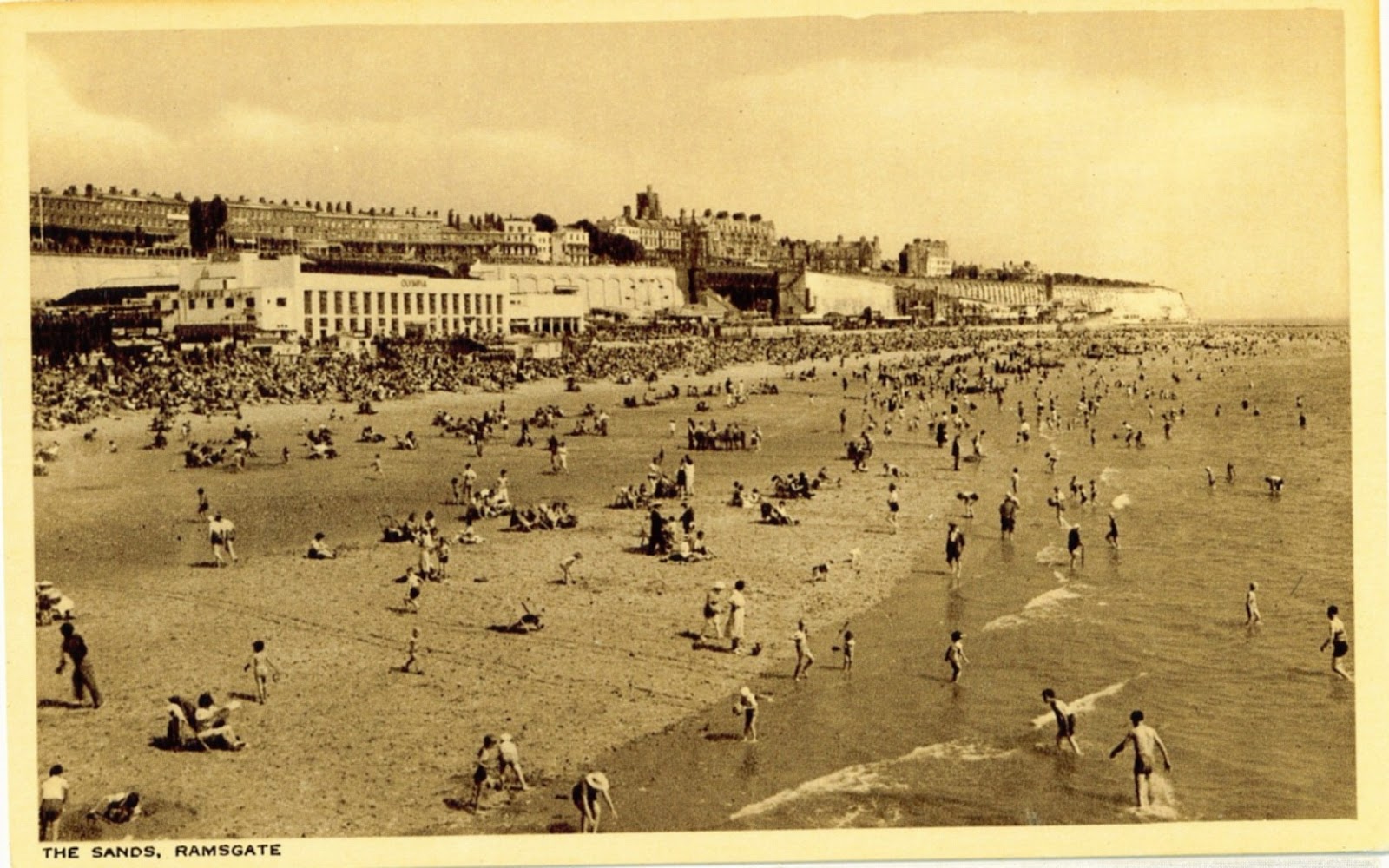
Ed. Apart from deleting email addresses so as not to encourage the spammers I have published this as is, so pretty much read from the bottom up. And illustrated the post with four different postcard variations of the same photo.    

Hi Michael

Please see below

I find it hard to believe that a meeting to discuss a very controversial £multi million project was not minuted. I am also amazed that officers ask me to apologise for reminding them of the code conduct when i must regularly chase them for replies

Please feel free to publish this

regards
Ian


----- Forwarded Message -----
From: Ian Driver <
To: Mark Seed ; Sue McGonigal
Sent: Wednesday, 16 January 2013, 8:16
Subject: Re: Urgent Your Meeting with SFP Ventures UK Ltd

Mark

Thank you for your e-mail.

I am astounded that no minutes were taken.

This was an official  meeting with an organisation that has a long history of poor performance.  There is also a high level of public and member interest in the Pleasurama development and the role of SFP. Furthermore there  may also be future legal action about the Council's agreement with SFP. Not to take minutes  of the meeting was, in my opinion,  incompetent and wrong and does not serve the interests of the Council.

I can see no reason for apologising for my comments about the officer code of conduct. Unfortunately, on several occasions,  I have found it necessary to  remind the CE to reply to my e-mails. I am sure you will agree that not to reply promptly to member enquiries and for members to have to regularly chase officers  for replies is entirely unacceptable and potentially breaches the the office code of conduct.

Finally you did not address my request to have copies  of documents submitted to the meeting by SFP.

In particular, press reports suggested that SFP would be providing letters to the Council from hotel developers indicating their support for the Pleasurama project. Could you please confirm that copies of these letters were provided to the Council and discussed at the meeting. Could you please let me have copies of these letters as is my constituional right. If by any chance the Council does not have  copies of these letters I would like to have a briefing before the Cabinet meeting on 22nd January about  what was discussed regarding the hotel situation.

I would be grateful if you could contact  me as quickly as possible to deal with this issue as my schedule is tight and time for meetings is limited.

Ian Driver


From: Mark Seed
To: Victoria Williams ianddriver
Sent: Tuesday, 15 January 2013, 17:25
Subject: RE: Your Meeting with SFP Ventures UK Ltd

Ian
In Sue's absence Vicki forwarded on the various emails since Christmas to me as you requested, as well as resending Sue's email from 9th January. However, as indicated in Sue's email below there are no minutes or other documents from this meeting.

Essentially the developer was updating officers and relevant Cabinet members on the progress that had been made in meeting the requirements of the exempt Cabinet report from July last year. This was primarily in relation to achieving the requirements you have set out in your notice of motion to Council in December that is being considered by Cabinet next week. As Sue indicates, no firm proposals were articulated by the developer at this meeting that would currently meet these requirements.

I really cannot provide anything further on this meeting than has been set out in Sue's email from 9th January, and clearly there is nothing to be collected prior to the Cabinet meeting tomorrow.

Bearing in mind that Sue had actually already provided a response on 9th January several days prior to your email to her today, and the documents you requested did not actually exist, I assume you are going to withdraw your statement that Sue could be seen as breaching the officer code of conduct. Personally I think an apology to Sue on this would also not go amiss.

Mark


From: Victoria Williams
Sent: 15 January 2013 16:06
To: Mark Seed
Subject: FW: Your Meeting with SFP Ventures UK Ltd


From: Sue McGonigal
Sent: 15 January 2013 15:50
To: Ian Driver
Subject: FW: Your Meeting with SFP Ventures UK Ltd

Dear Councillor Driver,

I understand that you have been experiencing problems with your TDC e-mail account and may not have had sight of Sue's response to you of 9 January, I have attached a further copy below for your information.  I would be grateful if you could confirm receipt of this e-mail and if you would like me to ask Democratic Services to investigate any problems you have been experiencing with your TDC e-mail account please let me know.

Kind regards

Vicki Williams
Executive Support Manager
Chief Executive & Leader's Office

Thanet District Council
PO Box 9
Cecil Street
Margate
Kent
CT9 1XZ


From: Sue McGonigal
Sent: 09 January 2013 17:44
To: cllr-Ian Driver
Cc: cllr-Alan Poole; Mark Seed; Harvey Patterson
Subject: RE: Your Meeting with SFP Ventures UK Ltd

Dear Cllr Driver,
Apologies for the delay in coming back to you, my diary after Christmas has been somewhat full of  meetings.

There were no minutes taken of the meeting with SFP Ventures as this was part of a commercial negotiations, where the developer provided an update on their efforts to secure funding, and wished to better understand the Council’s requirements in order to agree revisions to the development agreement. No firm proposal was made, and therefore at this stage there is nothing further to report on. I would anticipate that Cabinet will wish for the negotiations to resume early into the New Year, to keep the momentum going.

Regards,

Sue


From: Ian Driver
Sent: 02 January 2013 10:29
To: Sue McGonigal; Harvey Patterson
Subject: Your Meeting with SFP Ventures UK Ltd

Dear Ms McGonigal

Further to our previous correspondence I understand that yourself, Cllr Poole and several Council officers met with SFP Ventures UK Ltd to discuss the Royal Sands Development just before the Xmas break.

I would be grateful if you could provide me with a copy of the minutes of this meeting.


Yours sincerely


Cllr Ian Driver
Chair OSP

Tuesday, 17 July 2012

The Royal Sands Development on the Pleasurama site in Ramsgate, up before cabinet again next week.


As is usually the case with this development it is the secrecy surrounding any democratic discussion about it that I find most worrying.

We always come back to the fact that it is to be built on the most prominent, council owned seafront leisure site in Ramsgate. Because of this much of the towns leisure based economy hinges on getting it right.

My main concern with this development focuses on the safety issues, cliff stability, flood risks and emergency escape routes. As a local historian I am very much aware that Ramsgate Eastern Undercliff has a history of storm damage and cliff collapses that is sporadically recorded back to the mid 1800s. This history isn’t written up in one place and I periodically discover new information about it.

More of this information came up over the weekend when I was reading the book that I hope to have in print next week about the Granville, this time it related to Marina Road, the sloping road down the cliff in front of the Granville. According to the plans for The Royal Sands this road forms the access for busses and delivery lorries to the development.

After various cliff collapses there in about 1960 the borough engineer made this road a one way only, up the hill and I have taken the issue of having heavy vehicles going down this hill with various council engineers, particularly with respect to the forces associated with a line of heavy vehicles having to stop in an emergency while going down the hill.

The answers I got were along the lines of those Victorian engineers knew what they were doing and there was no problem. It was interesting for me to read that part of this structure collapsed the day before the opening ceremony and the opening parade had to be diverted around it.

As this development is to be built between the sea and the cliff face on an EA designated high risk flood zone, with access via Marina Road, then the condition of the cliff and sea defences between the lift and where Nero’s was (the hairpin bend on Marina Road) is important to the viability of the development.

Because the development is built between the face of the cliff and the sea, a safe and dry means of escape from the development also needs to be considered.

A considerable part of these problems aren’t really anyone’s fault, developer or council, as the site was designated a high risk flood zone after the planning permission was granted. However when it comes to the financial viability of the development, much is likely to hinge on the ability to borrow money for a new development built on a high risk flood zone, without a flood risk assessment.

Obviously as the plans were passed before it was designated it doesn’t have to have one, but I think at some point the proximity of the sea needs to be properly assessed and one hopes this doesn’t happen in the way it did for the Turner Centre.

The Isle of Thanet Gazette last published an article about The Royal Sands last month, here is the link http://www.thisiskent.co.uk/Ramsgate-Pleasurama-site-set-redeveloped-3-3m/story-16469934-detail/story.html and I guess this is the last time the various parties official position has been set out.

There are various things in this article that don’t quite make sense to me, the most obvious being that it says about 30% of the apartments have been reserved. Obviously as the apartments that are available to reserve are published on the internet, it is an easy matter to see that 14 out of 107 were reserved when the article was published last month and this figure is the same today.    

The council offices stance on the development has changed from when this came before cabinet three years ago when they recommended winding up the development and taking the land back, to their position now which is recommending that the cabinet approve going ahead with the development.

My guess on this one this that the council are concerned here about the developer taking them to court to get back the money he has spent so far.


I guess my position on this one is, if the council go decide to go ahead, I would like them to ensure that the development is a as viable and successful as it possibly can be and if they decide to pull out, that the site is returned to a usable state as soon as is possible.

So going ahead for me ought to mean a proper flood risk assessment and an assessment of the cliff condition from the lift to the old Nero’s site, before continuing with the development.

Much of this is cost related, as any problems with either the cliff or the sea defences may be much cheaper to solve before the development is built.


I guess of all the aspects of The Royal Sands it is the flood and storm situation that is the most bizarre.

Conversations with those involved go along the lines. “there is no problem as we have complied with all the legalisation, so there isn’t a problem.”

To which I reply. “You do accept that the site is an EA designated high risk flood zone.”

The answer to this one is now always. “Yes”

I then say. “You do accept that there hasn’t been a flood risk assessment.”

This has pretty much moved from the “Not that we know of” to the “Yes” camp.

Within a £22,000,000 project, the cost of a flood risk assessment would be a drop in the ocean and it is most likely that any work that needed doing would be funded by national government.

The other aspect of this is the newly built foundations, where conversations with the parties involved assure me that the shallow foundations on the old beach are adequate and properly calculated, something I don’t disagree with.

The problem occurs when I ask them about the sea defence that protects the sand these foundations are sitting on from the sea. “Yes” they agree that the sea defence dates from 1860. “Yes.” They agree that they have no plans or maintenance record for it.     


Now obviously this sea defence may be perfectly ok, on the other hand it may need some repairs and maintenance before people are going to live in the development behind it, which is sitting on sand.


On of the councillors asked me. “How long it would take before there was a problem, if we had a big tidal surge storm.”


What he was getting at was if the sea defence started to wash out, how long would the council have to put in some alternative to protect the foundations from washing out, which would cause the building to collapse.


The only other example we have of this is when the other sea defence built in 1860 by the same railway company failed in 1953, then we lost about ten square miles of land to the sea in one night.

The cliff is a difficult one, the whole of the cliff face from the lift to the hairpin bend where Nero’s used to be is faced with a variety of man made structures, to a lesser or greater degree these act as cliff supports. And to a lesser or greater degree these are intended to stop the effects of the weather from damaging the chalk and causing a cliff collapse.

The idea with most of these structures is to waterproof the front of the cliff and the cliff top to stop rainwater from getting in, the slightly acidic nature of rainwater causes the chalk to soften and disintegrate.

with a natural grass topped cliff this is largely compensated for as soon as one gets a few feet into the chalk as the chalk itself acts as a filter purifying the water. I have simplified this issue considerably to help people form a mental picture of the situation. 


A problem here and one that has contributed to some very large cliff falls in Ramsgate, is that when the surface on the top of the cliff cracks this concentrates the rainwater into a small area, causing the damage to the chalk to extend much further in.

Another problem is that the supporting façade structure holds back small chalk falls until the structure fails and a much larger fall occurs.  


The council’s engineers and the engineers that advise the council describe the cliff façade behind the Royal Sands as structures to prevent weathering and not as support structures. Essentially it is the chalk cliff that holds up the concrete façade and not the concrete façade that holds up the chalk cliff.


Generally there are three main signs that all is not well with these support structures, vegetation growing from any cracks, spalling (concrete cancer) where the metal reinforcing rods inside the concrete go rusty and damage the surrounding concrete and movement of parts of the structure.   


Back when the development was first granted planning permission this structure showed all of these signs, and I made a considerable amount of fuss along the lines of the fuss I am now making about the sea defence.


Whether it was because of this fuss or for some other reason the council eventually decided to survey most of the cliff façade behind the site. The results of this survey were pretty bad, the gist of the results was the structure was in a poor state, had a short serviceable life and needed emergency repairs.  Two years after the survey I managed to get hold of the report and made some more fuss, which may or may not have resulted in the emergency repairs.


One way or another the council spent about £1,000,000 on repairing the cliff, but at some point or another the council officers and councillors seem to have got it into their heads that this repair has given the cliff façade a new life comparable to the expected life of the development.

I guess since the £1m repairs, the repairs to the repairs, the weedings, the condition of the cliff now, you can see the latest crop of vegetation the picture above, are all rather self explanatory. 


After the cliff repair various things came to light that I find considerable cause for concern.

The first was the crack and bulge in one of the panels that I reported to the council and was subsequently repaired, it wasn’t this occurring that really concerned me but that the crack which didn’t appear in any of the reports prior to the £1m repair had been filled rather than the panel replaced during the £1m repair.

The next was the lose bit of masonry which I reported to the council and the hse and about which they took no action about until a large chunk of it fell off partly into the site and partly outside.

After that was the business where the council gave me the wrong plans to the arched part of the cliff façade, when the developer undermined it I made a considerable amount of fuss fire brigade hse and so on. 

As it happened there was no safety issue as the arched part is cast concrete and not concrete blocks as the plans showed.

But what was really worrying was the council, developer and the survey for the £1m contract, all used these wrong plans.    


I guess the underlying problem here is that the council have got into a position where having spent £1m on the cliff, they have to say that it’s ok condition wise.

My own feelings about the cliff are that the arched concrete part is probably in fairly good order, this was built in the 1930s after a series of large cliff collapses and I would guess that because of these no chances were taken. The square portal part at the lift end I haven’t really filled I the history of this part properly. I am pretty certain that it was constructed at various times and in various bits between 1940 and 1970, this is the part where the majority of the vegetation is growing out of the wall. It was one of the panels in this part that had to be replaced after the contract. This was also this part that was the subject of the contractors investigation. 


I have laid out what I hope is a very concise explanation of my concerns about aspects of this development because of the cabinet meeting about it next Thursday.

Once again the cabinet have to decide whether to go ahead with this development, this issue is to be discussed at the end of the cabinet meeting, in secret with the press and public excluded.
Picture added to respond to comment

Friday, 13 April 2012

The Royal Sands Development on the Pleasurama Site in Ramsgate on the front of The Gazette.


The ongoing saga of the Royal Sands is the subject of the lead article in this weeks Isle of Thanet Gazette, you can read the story online at http://www.thisiskent.co.uk/Thanet-council-negotiates-pound-3-3-million-deal/story-15803551-detail/story.html and for a local paper story covering a very complicated subject in a very few words it goes some way to getting at the financial issues.

As Councillor Simon Moores has already stated on his blog that the council’s secret documents on this issue have leaked out, see http://birchington.blogspot.co.uk/2012/04/on-royal-sands.html I have to tread the unusual line here of talking about a council secret, that isn’t really a secret anymore, but the council still seem to saying is a secret.

Before anyone considers that there may be party political implications here, the secret council documents that related to the secret cabinet meeting also leaked out when the Conservative cabinet discussed the issue three years ago.

Anyway I will try to summarise the situation in as few words as possible, which I hope will enhance the information in the newspaper article.   

I think that when the development was first approved by the council the idea was that it should be mainly a leisure development, in this instance the leisure elements being the retail units along the front of the ground floor of the development, the majority of the ground floor is car parking for residents, so these are not that significant and the hotel at the harbour end of the development.

I think the council view this hotel as being the key aspect of the development with regard to trying to regenerate Ramsgate, and every document that the council have produced on the matter seems to include clauses to ensure that when the residential part of the of the development is built, the developer doesn’t just take the money and run.

The key documentation here is the development agreement, which is in the public domain, see http://www.michaelsbookshop.com/pda/ I have published it there in a series of linked internet pages, it’s long and complicated.

After the buildings on the site burnt down, the council made a considerable effort to recover the leasehold from Jimmy Godden, this they finally achieved over ten years ago.

Then they accepted a proposal put forward by Whitbread with SFP as partial financiers but unfortunately Whitbread pulled out and SFP changed the design of the project.

This happened during the change of administration from Labour to Conservative and during the confusion plans got approved for the current development in January 2004, at the time the plans were for a development that was too tall to fit in the available space and this has presented various problems during the last ten years.

The cost of building the whole development is in the region of £22m and the idea was that the developer had £10m available either in cash or by borrowing it from third party funders, the remaining £12m coming from selling the departments as they were built.

The council was to have been safeguarded against the developer going bust by the developer having a performance bond, which essentially is an insurance policy issued by a bank. The idea being that if the development wasn’t completed the council would have enough money to finance its completion.

The performance bond would have covered the development for £5.6m and as the council were reasonably financially covered they signed the development agreement in October 2006.

The basis of this was that the council granted 199 year leases and the council got paid for the land by getting £15,500 for each apartment sold, 50% of whatever the developer could get for the commercial leases, probably not much, value for commercial leases tends to relate to the benefit of having an old lease to sell with a below market rent.

Anyway in 2009 the developer came back to the council because he couldn’t get the performance bond i.e. the insurance policy to cover the council’s liability if anything went wrong.

What the developer asked to do was to deposit £1m in a council bank account instead of producing the £5.6m insurance policy.

On 16th June 2009 this came before a secret cabinet meeting with recommendation from the council officers to the cabinet to take back the land from the developer and not proceed with the development.

The cabinet decided instead to let the developer proceed with the development on the basis of the £1m deposit.

The forward funding at this time was to be £1.5m from the contractor, £5m from the hotelier and of course the £1m in the council bank account.

At this time the land was valued at £13.6m

Now the developer has come back to the council again and this time seems to be saying that they can’t raise the money from the third party funders so what the developer is proposing is that the council sell them freehold of the land for a payment of about £1.6m now and a further payment on the sale of each apartment totalling about £1.6m plus any amount relating to the commercial property.

This would then give the developer the land worth about £13.6m that the could raise money against.

At the moment the other council liabilities are maintaining the cliff façade that they have already spent £1m on, and the sea defence.

I have several concerns here the main one being is that this plan relies, at several stages, upon borrowing money against building land in a high risk flood zone, that has no flood risk assessment.

Another is that the hotel would no longer be guaranteed to be built first and as it is to be built in front of the part of the cliff that the developer’s contractor has partly surveyed and found to be faulty, this may be a hindrance to building the hotel.

I will try to add to this if anything else occurs to me that may help people understand the issue.

Wednesday, 4 April 2012

Royal Sands Development on the Pleasurama Site Cabinet Decision Tomorrow

 I think in terms of Thanet the mixture of prominent position and size means this is probably the most important mostly residential development in Thanet within living memory.
 An aspect of the very prominent seafront buildings is that on the whole whether they are good bad appropriate or inappropriate they mostly seem to stay put for over 100 years.
 The economic and visual impact of large developments on the seafronts of our main towns is considerable and goes a very long way towards making our towns what they are.
 Whether you agree with this approach or not the meeting to decide the future of this development is to be held in secret and all of the associated documentation is secret too, see http://tdc-mg-dmz.thanet.gov.uk/ieListDocuments.aspx?CId=151&MId=2919&Ver=4
 All we have in the public domain, is the general subject of the meeting, “The Royal Sands Development Agreement.”

Oddly enough the actual development agreement is in the public domain, see http://www.michaelsbookshop.com/pda/ this is a long and complicated document that sets out what the developer should build and when, it also sets out how the council owned land becomes owned by the developer and the council gets paid for the land. 
 I think it reasonable to assume that the object of the meeting is for the council cabinet to decide either on changes to the development agreement (either writing a new one or another variation), or on terminating the agreement altogether.

I am pretty foggy about the legal and procedural ins and outs, but am pretty sure that with the council, it is the cabinet or the full council only, that has the power to change development agreements relating to council owned land.

My guess is that what happens in practice is that the developer approaches the council officers asking for changes and those officers work out a series of options that protect the council’s interests and then put those options before cabinet for decision.   
 Obviously the development isn’t going to plan, as the schedule in the development agreement says that that most of the structural frame of the building should be built by now.

Obviously the hopes and expectations in terms of employment, which were along the lines of about 200 people working on the site during the last year didn’t happen.

Looking at the site at the moment, there isn’t a sense of one stage finished and another about to commence, but much more one of a work in progress abandoned unexpectedly. Holes dug but not filled with concrete, incomplete pillars with leaning and rusting reinforcing rods.
 My guess here is that the situation at the moment relates to finding the money, to continue the building work, of course it could be because they have now reached the area where the developers contractor surveyed the cliff façade and highlighted problems, see http://www.thanetonline.com/cliff/index.htm or their may be some other explanation. The secrecy makes it difficult to know for sure.

Personally from the council’s engineers response I received via Allan Poole I doubt that it relates to the issues I highlighted, to do with assessing the flood risk, sea defence and cliff stability.

Anyone who missed this the two blog posts, the first one my open letter to cabinet members and two of their responses, here http://thanetonline.blogspot.co.uk/2012/03/royal-sands-development-on-pleasurama_23.html and a further post containing the email from Allan and my reply, here http://thanetonline.blogspot.co.uk/2012/03/royal-sands-development-on-pleasurama_30.html
 So having considered all of this I intend explore the financial implications, first I am assuming that my concerns as a local resident won’t have that much in the way of implications here, particularly as most of my concerns were raised first so long ago, way before construction work started on the site about a year ago. I would guess that at that time they had a financial plan, as in the first place they wouldn’t have started the work and in the second place the previous cabinet would have stopped the development from proceeding three years ago, when they had the opportunity, if they thought it couldn’t be financed.

When the site was first put out for tender by the council, one of the most important aspects was that it should have a major leisure aspect as well as a residential aspect to finance this. 
 As an example of what I mean here, another firm that tendered for this site offered to include a swimming pool that they were going to gift to the town on completion of the development. This was Westcliff Park Estates at that time they were building the development opposite the boating pool on the Westcliff in Ramsgate.

The council rejected them on the grounds that they lacked the financial credentials and selected SFP who at that time were purely a Virgin Island company, so the council wouldn’t have had any way of discovering their financial status.
 So I come to what may have caused the developer financial problems, I think idea was that once the first apartments had been sold the money raised was to have been used to finance building more departments.

One problem here is that I think – reading the development agreement - the council were concerned that once the apartments were built the main leisure aspect the hotel wouldn’t be built. This is of particular concern as the hotel is in front of the part of the cliff that the developers contractor has examined and found has problems.
 So at the moment there is a development agreement saying that the hotel has to be built first, that is before the money from selling the apartments starts coming in.
 Another problem here is to do with the flood risk, this isn’t the same as the safety issues that I have been highlighting for years, but relates to borrowing money. During the period between when the plans were first approved and now the site has been designated by the Environment Agency as high risk, in terms of flooding, but because the developer hasn’t been legally obliged to he hasn’t had a flood risk assessment made of the site.
 This would cause a problem for anyone trying to obtain a mortgage for a new build situated in a high risk flood zone, that may make it difficult for the people who want to buy the apartments to get the money to do so. I am not really certain if this would also be a problem for the developer if he needed to find finance, say for example to build the hotel. I do think that it may be a consideration if we ever get to the stage where an apartment reaches a stage where someone can actually buy it.
 In terms of other sources of finance, there is of course the value of the freehold of the site and there may be some way that financing the development could be financed using the land as security for a development loan.
 I may add to this if any further thoughts occur to me and as much of this post relates to the legal and financial aspects of councils and property development development, something that hasn’t figured much in my experience as an engineer, anglican religious and shop assistant, it is highly likely that there is much I have either missed out or misunderstood.     
  The pictures of this part of Ramsgate, click on them to enlarge, are a small proportion of the ones that I used to work out the history of the sea defences in this part of the town.
Having looked at the documentation again, see http://tdc-mg-dmz.thanet.gov.uk/documents/g2919/Public%20reports%20pack,%2005th-Apr-2012%2019.00,%20Cabinet.pdf?T=10 “Heads of Terms Agreement” it looks as though there is the possibility of a new development agreement involved.


Friday, 30 March 2012

Royal Sands Development on the Pleasurama Site Ramsgate Update.

The decision about development agreement by Thanet District Council Yesterday was deferred to an extraordinary cabinet meeting on 5th April, and I have received an email asking some questions about the development from Allan Poole who is the cabinet member handling this issue.


 Here his response in red.

Hi Michael,


I have spoken with our engineer about your concerns.


He says the points raised by you are not new and that many of the statements made are not an accurate account of actual events. He points out that you say you instigated the HSE intervention which resulted in emergency repairs and a safety cordon.  This is certainly not the case. The HSE viewed the cliff condition report and found no reason to take action or make recommendations.


He points out that there is no comparison between the Northern Sea Wall failure in 1953 and the sea wall at Ramsgate.  These are quite different types of construction and are subject to very different conditions, it is therefore not possible to make such a comparison or suggest that a similar failure would occur without any meaningful evidence to support the claim.  You are correct in that TDC do not hold drawings of the 1860 sea wall at Ramsgate but this is to be expected given the age of the structure.  There is however nothing to suggest that the wall is inadequately constructed.  It also enjoys the protection afforded by the wide sandy beach which stops it from being subjected to regular wave energy (which is the normal mechanism by which a sea wall's condition deteriorates).


Any design changes to the foundations for the development would have been checked by the company undertaking the building regulations work.  It would be surprising if the building is to be founded directly on sand, although this alone does not mean the foundations are inadequate.


You first started making enquiries about the cliff facade wall and site several years ago and claimed that the facade had inadequate foundations and had been undermined by excavation undertaken as part of the development work, these claims was investigated and found to be incorrect.


Yes the cliff facade is only a facing and not a retaining/supporting structure, but you have rather missed the point of a facing structure which is to protect the cliff from weathering to preserve its condition.


The need for a flood risk assessment was discussed with the Environment Agency at the time of the application.


I hope this clarifies most of your points.


Regards,


Alan


I have done my best to answer the issues he has raised below my reply in blue.

Hi Allan many thanks for taking the trouble to look into this issue, my main concern was that because of the secrecy surrounding every aspect of this development there could be some disparity between the information available to cabinet members and real events.

As you are probably aware I have put the majority of my information about The Royal Sands or Pleasurama Development on the internet, so it has been in the public domain since events occurred, and so there has been plenty of opportunity to refute any of this information.

I think the best road to go down here is for me to give you my version and anything that doesn’t make sense to you I will provide the substantiating evidence, emails between me and the HSE, council officers, Jacobs, the various contractors, The Environment Agency and so on.

I will include some links to relevant information that I have published online, although in most cases I have removed the names of the individuals involved.

Starting with the cliff façade, image 1 makes this easier to understand.

Yellow portals I would guess this bit was built between 1940 and 1950

Green arches built I think in the 1930s

Purple brick built in the 1860s

Starting with the purple bit, this was built in 1860 as part of the tunnel entrance about half of it collapsed in the 1960s and the bit between the two pillars had the bottom exposed recently and the front bit which you could see doesn’t extend down to solid chalk, photo if you want.

This is half in and half out of the site and wasn’t surveyed or repaired when the rest of it was.

The sequence of events with this was; we had a lot of heavy rain in the autumn of 2010 and because the drain on top is blocked, the surface of the thing became very wet and some came lose so it was hanging partly over the public highway and partly over the people working on the site below.

I reported it to the council’s engineer who said it was safe.

I reported it to HSE who told me they had contacted the council’s engineer, who said it was safe.

The following weekend a lump weighing about 70 kilos fell off it from the height of about forty feet, it would certainly killed or injured anyone underneath.

After this the council removed the lose bits and the vegetation growing out of the façade and put a safety fence below the cliff on the public highway side.


Onto the green bit, the council sent me the HSE and Cardys the wrong plans for this, actually this whole part of the cliff façade is cast concrete has deep foundations and seems to me to be pretty sound, but the plans they sent showed a similar arched façade from a different part of the town, which had shallow foundations and concrete blocks between them.

When Cardys started digging away at the base of it I made a lot of fuss as I genuinely think had the façade been designed to the plans the council sent me, there would have been some sort of accident.

In the end I found the correct plans, there were a lot of emails and phone calls about this, including one from Cardys asking me for the plans.

Personally I think the HSE and the council should have taken the precautionary measure of closing the cliff top footpath while they worked out what was wrong, particularly as there was no dispute about the plan showing the shallow foundations and block infill being the right one at the time.

Anyway as soon as I discovered the error with the planning sheet I took the path of least resistance and apologised to everyone involved for making a fuss.

Next up the yellow bit, the correspondence about this area is extensive and goes back to when the scaffolding was erected for the major cliff façade repairs, which exposed the bottom of the cliff façade.

This showed that there was nothing underneath parts of it and so I contacted Jacobs geotechnical engineer who wrote the survey report http://www.thanetonline.com/cliff/id2.htm he assured me that there was a continuous 2 metre thick concrete foundation under it. I went on site and poked a stick under it, he then conceded that part of it had no foundation. I have this exchange in writing if you want it. Since then I have been trying hard to get the council to survey the façade foundations as well as the façade that was exposed in 2005 that has already been surveyed.

Shortly after the main contract was completed I did point out a defect and the council eventually conceded that it was serious and spent £22,000 on rectifying it.

It is this part of the façade, the yellow bit on the picture that deteriorated rapidly after the £1,000,000 repair job, I would have to check the figures but I think SFP contributed 10% towards this and the rest was funded by TDC. I say this as obviously TDC officers and the TDC employed consultants supervised this work and should it prove defective it wouldn’t reflect well on them.

I discussed this part of the façade with Cardys and sent them the emails between me and Jacobs. So Cardys did what I assume was a preliminary examination of this part of the façade, see http://www.thanetonline.com/cliff/index.htm they examined some of the infills and dug out only one of the buttress foundations. Make no mistake here “Made up Ground” means a pile of muddy earth and chalk.

After this I asked them why they hadn’t continued and examined the other foundations and they said that the council had assured them that the façade was sound so they were working on the council’s assurance.

Next is the issue with the weight limit topside, the instruction for this comes from Jacobs and I have had promises that it will be instigated from the council’s engineer, so I don’t think there is any dispute that allowing heavy vehicles on the edge of the cliff is dangerous. Several incidences of this have occurred and the promises date back for years.

My understanding from the email I received from the HSE is that the program of regular cliff inspections was required by them as result of the concerns I raised.

That said I am not saying that the cliff is dangerous, all I am asking for is a thorough survey of the façade, including the foundations, that is independent of the people who supervised the £1m contract to stabilise it.

On now to the flood risk assessment.

The Environment Agency’s letter to the council about this is published at http://www.michaelsbookshop.com/ea/id2.htm and at the time I thought “we would highly recommend that a full FRA is undertaken” was pretty clear.

However on discussing this with council officers inferences were made that the EA Technical Specialist was wrong in some way, had exaggerated the issue. Personally I concluded this was because the engineer involved was female, (at that time we hadn’t had the experience locally of a female engineer successfully demolishing a power station with high explosives) if you have any other idea as to why the council officers would ignore the recommendation of the EA’s technical specialist I would be interested to hear it.

Some time later I learned that Roger Gale and Laura Sandys were meeting with the most senior EA officers in the southeast, and so in view of this I asked them to check the EA’s position and get it again in writing, I think I best quote from Laura’s email, I don’t want to be responsible for any inter party misunderstandings:

“The Pleasurama development gained planning consent prior to the publication of the latest government guidance on development and flood risk, PPS25. When we were consulted in 2003 our floodplain maps did not show the site to be at risk and the design, at that stage, had clear evacuation routes to the the top of the cliff. But, having received revised plans for the development last year, we highlighted our concern over flood risk and recommended that a site-specific flood risk assessment be undertaken. This would inform appropriate mitigation measures such as recommended floor levels, flood resilient design and an evacuation plan to ensure that the development is made as safe as possible.”

On to the sea wall, this was built in 1860 as part of the railway extension from Herne Bay, aspects of the civil engineering related to this are the subject of historical record.

In the first instance several of the bridges were condemned by the governments inspector and lead to the opening of the railway being delayed.

There were several accidents at Ramsgate, some fatal, which were probably due to the incline being too close to the roundabout.

The Northern Sea Wall Failure in the 50s, which you mention.

The collapse of the tunnel entrance in the 60s.

The 1953 storm was associated with a northerly wind i.e. blowing the sea away from Ramsgate, the only recorded incidence I am aware of in that storm was that a ten ton crane that had been working on the beach was thrown by the sea into the middle of where the development will be.

Certainly there was no significant damage to the harbour, however a much less severe storm with a different wind direction in 1978 did damage the harbour wall, see image 2

Another mitigating feature is indeed the large sand beach, this doesn’t appear to caused by the lee of the harbour as all of the pre 1914 photographs show no build up of sand in front of the site. My understanding is that this large build up of sand was caused by the defences for both world wars.

The majority of this sand was used for infill when Port Ramsgate was built and since then the amount of sand there has been much less and of variable amount.

I don’t think there is any question that the foundations, already constructed, are entirely founded on the sand that forms part of the beach, plenty of emails about this between me and the contractor and plenty of photos of the construction.

As no plans of the 1860 sea wall exist it would be difficult for me to guess what its structural integrity would be or how it would fare in a large storm with the wind in a different direction. I am however certain from my correspondence with the contractor that there was no awareness that there was anything other that a solid modern sea defence in front of the development, when the shallow foundation on sand was designed. I have his email thanking me for drawing the uncertainties regarding the sea wall to his attention and promising to draw it to the attention of the designers of the foundations, this is dated after the foundations had been completed to the stage they are now.

Once again though I am not saying that this combined information means that the development is dangerous, what I am asking for is a survey of the sea wall and flood risk assessment.
Best regards Michael